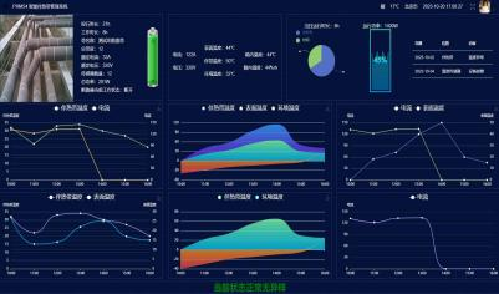
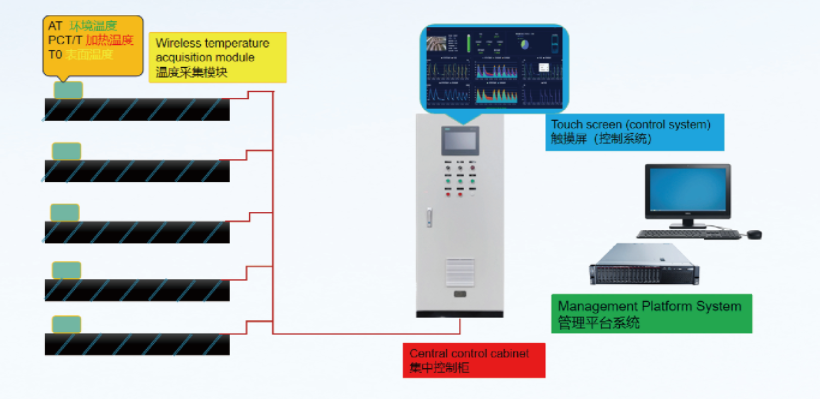
This system utilizes intelligent sensing, 4G wireless transmission, and automated management to automatically control each heat tracing device. It sets fixed activation and deactivation durations for each device based on their operating characteristics, achieving energy-saving effects while ensuring the normal operation of the equipment, and does not require manual operation.
The system has the following three functions:
1.Power saving
The system collects environmental temperature of the heated equipment, temperature of the heating tape, surface temperature, material of the pipeline (tank), wall thickness, flowing medium, insulation layer parameters, etc. to build a data model, including source database design, data integration, ETL process, data warehouse model creation, structure design of data lake, BI tool presentation design, as well as machine learning or artificial intelligence technologies. It adopts a combination of four digital modeling methods: relational, object, dimension, and time, and embeds 1000+ mining components. It includes mature machine learning algorithms such as classification, regression, clustering, prediction, and association. It calculates the longest power-off interval value of the heating tape under the current state, provides on-site module operation instructions, completes remote power on/off, and minimizes the actual working time of the heating tape while ensuring the normal operation of the equipment, thereby saving electricity and extending the service life of the heating tape. It can save up to 40-80% of electricity.
2. Fault Prediction and Online Diagnosis
The system, through the establishment of information databases, knowledge bases, and large databases, combined with the equipment operation model, relies on online signal monitoring, feature extraction, state recognition, parameter comparison, and forecast decision-making, to predict potential equipment faults in advance. It conducts intelligent diagnosis and analysis of each component's faults and promptly sends messages to the managers to remind them of maintenance and handling, reducing accidents, lowering heat insulation material losses, and ensuring the normal operation of the equipment.
3. Automated management
Without the need for manual operation, managers can view the usage status of each device in the background system or through the mobile APP, including current, voltage, temperature, power, etc. They can also adjust the preset values themselves to meet the equipment requirements.